


Hubble telescope takes one of the most detailed looks at neighboring Andromeda galaxy ever — Space photo of the week – Live Science
The most famous giant spiral galaxy in the universe has been revealed not to be the star factory it once was, just as NASA’s Nancy Grace Roman Space Telescope is set to unlock even more breathtaking cosmic insights.
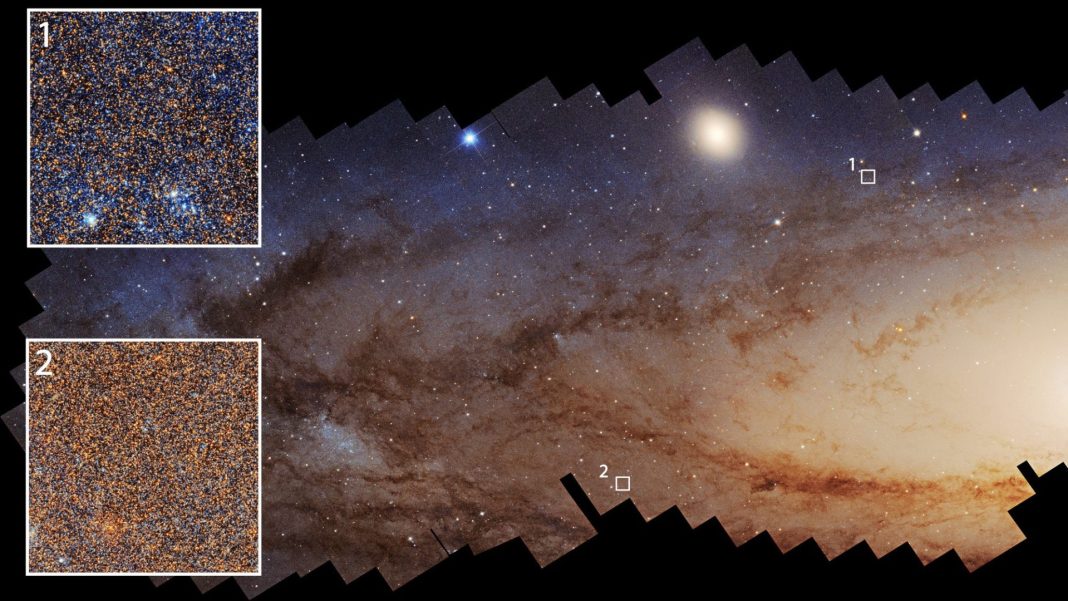
Andromeda is the only major galaxy in the universe that is speeding closer to the Milky Way as all the others rush away. Now, a new analysis of Hubble Space Telescope data hints that our galactic next-door neighbor may be winding down from a big burst of activity as it draws toward a possible collision with our galaxy.
The new study found that the Andromeda galaxy (M31) has been steadily slowing its production of new stars over the past 500 million years. The findings suggest that the galaxy is naturally winding down after a more active period, offering astronomers valuable clues about how large spiral galaxies evolve.
Andromeda is a giant spiral galaxy similar to the Milky Way, but with around twice its mass. As the nearest large spiral galaxy to Earth, it provides an ideal laboratory for studying galaxy formation and evolution. An understanding of when and where stars form is essential for explaining how galaxies develop and change over time.