


Iran strikes cargo ship on U.N.-backed route in Strait of Hormuz – The Washington Post
The attack on a cargo ship comes after a spike in the number of vessels using a new shipping lane set up by the U.N. and Oman.
Follow us on Social Media
Support our effort so we can bring you
Daily news Ad Free.

The attack on a cargo ship comes after a spike in the number of vessels using a new shipping lane set up by the U.N. and Oman.

The decision was announced Thursday during a briefing on royal finances at which Charles became the first British monarch to reveal the taxes he paid to the government.
LONDON — King Charles III will not live at Buckingham Palace after the completion of a 10-year, 369 million-pound ($487 million) refurbishment program as the monarchy seeks to increase public access to the historic building that has been the center of royal life for almost 200 years.
Royal officials stressed that the king and Queen Camilla would continue to work out of the palace, which will remain “the ceremonial and operational center” of the monarchy. But for the rest of Charles’ reign, the king and queen will remain in nearby Clarence House.
“It is and will remain Monarchy HQ, the crown jewel of our national buildings,” said James Chalmers, the senior royal official responsible for managing the king’s financial affairs.
The decision was announced Thursday during a briefing on royal finances at which Charles became the first British monarch to reveal the taxes he paid to the government. The king paid 12.9 million pounds ($16.1 million) in income and capital gains taxes in the 2024-25 financial year, up from 11.7 million pounds the previous year.

A proposed tax on billionaire’s has divided the Democratic Party in California with most of the state’s prominent liberals opposing the measure.The Washington Post • Jun 26, 2026
Leaders of a proposal to tax California’s billionaires faced growing opposition Thursday as they declared the issue would make the state’s ballot in November.
Top Democrats and advocacy groups were lining up against them. Silicon Valley titans were preparing to spend heavily to defeat them.Gov. Gavin Newsom said the measure would hurt the state.
But officials with the health care union behind the “Billionaire Tax Now” campaign said on Thursday night on a Zoom call that they were confident.
“Popular support is on our side,” said Debru Carthan, the vice president of the union, SEIU-United Healthcare Workers West.

WASHINGTON (AP) — The Supreme Court on Thursday allowed the Trump administration to end legal protections for migrants fleeing violence and natural disaster in Haiti and Syria, exposing hundreds of thousands more people to potential deportation.
The 6-3 decision overturns lower court orders and allows the Department of Homeland Security to swiftly end temporary protected status, a program that protects a total of 1.3 million people from 17 countries.
It marked another victory at the high court for Republican President Donald Trump’s sweeping crackdown on immigration. Though the conservative-dominated court has put the brakes on some of Trump’s immigration policies, it handed him a second win Thursday in a decision clearing the way for the revival of a policy restricting immigrants seeking asylum.
The court’s conservative majority found that the law doesn’t allow courts to question the process that immigration authorities use to revoke the protections.
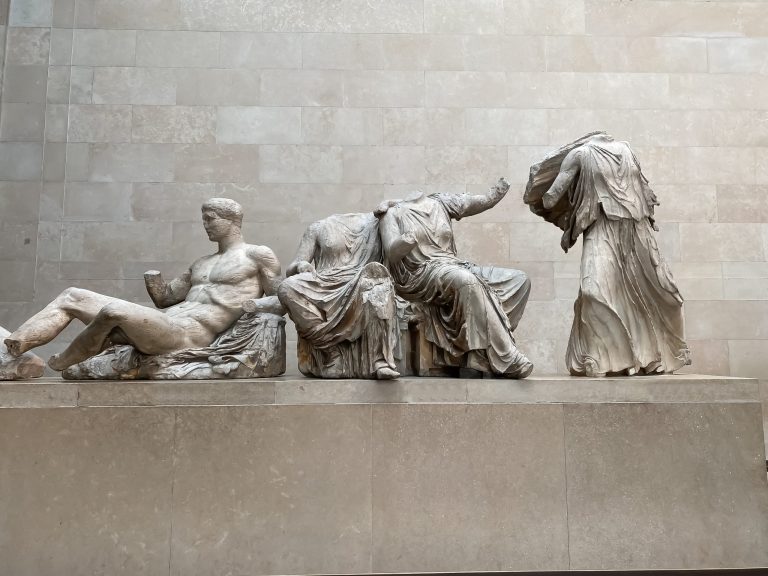
The Parthenon Marbles (Elgin Marbles): A Story of Removal, Preservation, and Repatriation.
The Parthenon Marbles, often called the Elgin Marbles, are a collection of ancient Greek sculptures and architectural elements from the Parthenon and other structures on the Acropolis in Athens. Dating primarily to the 5th century BCE under the direction of Phidias, they include pedimental figures, metopes, and a large portion of the iconic frieze depicting a procession.
Roughly half of the surviving sculptures were removed in the early 19th century and are now housed in the British Museum in London.
The debate over their ownership and location remains one of the most prominent cultural repatriation issues in the world.
Thomas Bruce, 7th Earl of Elgin, served as Britain’s ambassador to the Ottoman Empire, which then controlled Greece. Between 1801 and 1804, his team removed sculptures from the Parthenon, which was in poor condition after centuries of damage, including use as a mosque, an explosion in 1687 during Venetian bombardment, and local quarrying for building materials.
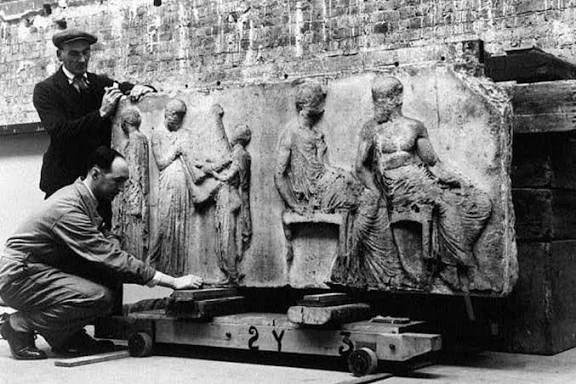
Elgin obtained a firman (official decree) from Ottoman authorities, interpreted by his side as permission to “collect” and remove marbles. The exact scope remains disputed: the original firman is lost, surviving copies are vague, and Turkish officials have stated there is no evidence in Ottoman archives of authorization to remove pieces from the Parthenon itself. Critics, including Lord Byron, denounced the removals as vandalism. The marbles were shipped to Britain amid difficulties; Elgin faced bankruptcy and sold them to the British government in 1816 for £35,000 (far less than his claimed costs), after a parliamentary inquiry. They were then transferred to the British Museum.
The marbles have been on permanent display in the British Museum since the 19th century, housed in a dedicated gallery. The museum argues they are legally acquired, have been preserved and studied there, and benefit from being part of a universal collection viewed by millions annually for free. They form part of the museum’s narrative of world cultural history. The British Museum maintains that dividing the sculptures allows complementary stories in Athens and London.
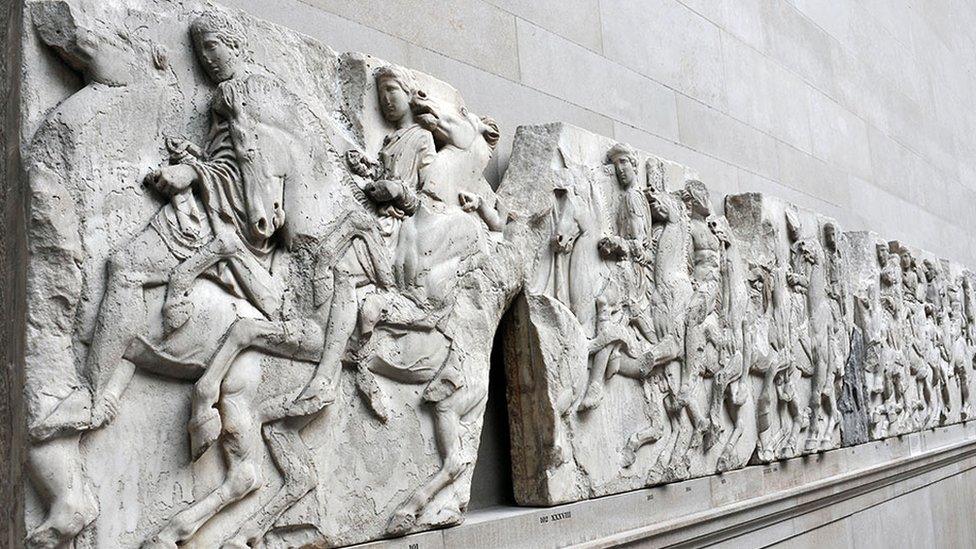
Greeks have sought the return of the marbles since independence in the 1830s. Formal modern campaigns intensified in the 1980s under Melina Mercouri, actress and Greek Minister of Culture, who passionately argued at venues like the Oxford Union that the marbles are the “pride” and “essence of Greekness” and belong in their architectural context near the Parthenon. Greece built the Acropolis Museum (opened 2009) with a dedicated gallery designed for their potential return, displaying the remaining pieces with casts or empty spaces for the London holdings.
Subsequent Greek governments have continued diplomatic efforts, including appeals by Prime Minister Kyriakos Mitsotakis. Support has grown internationally, with recent endorsements (e.g., from Italy). Discussions of loans or partnerships have occurred, but Greece insists on permanent reunification. The British Museum and UK government have resisted permanent return, citing legal ownership and the benefits of the current arrangement, though talks continue.
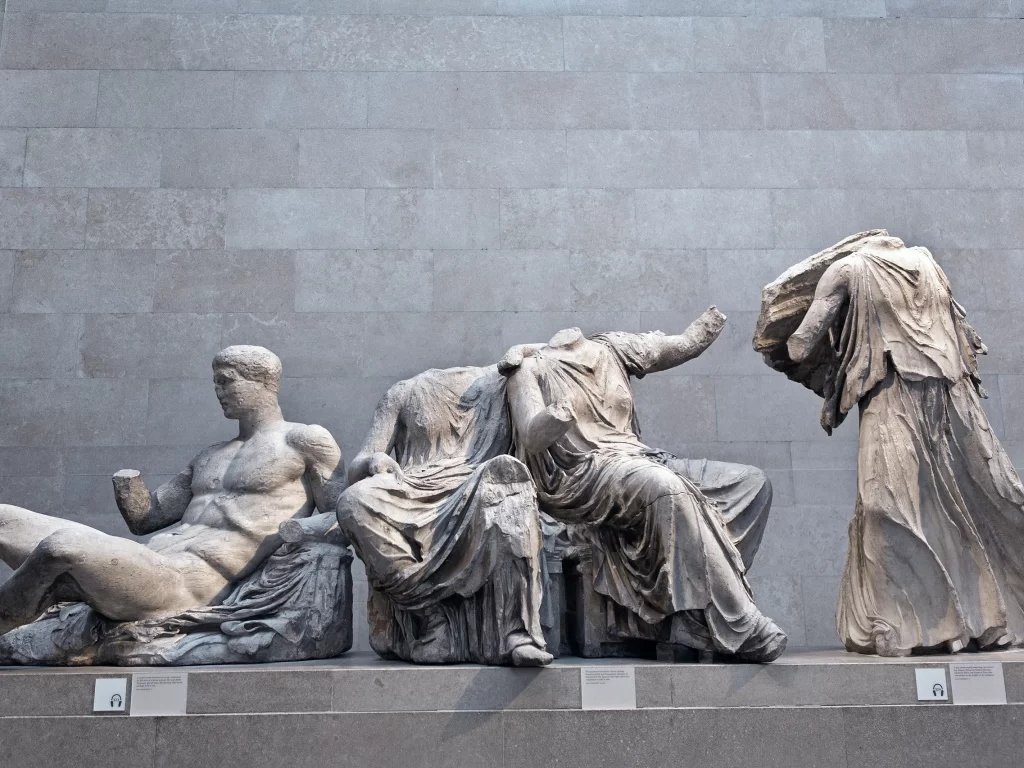
The British Museum is one of the UK’s top tourist attractions, drawing around 6 million visitors annually in recent years (e.g., 6.2 million in 2023/24), often ranking as the most-visited paid-attraction-free site. The Parthenon Marbles are a major highlight, contributing to the museum’s appeal alongside other world treasures. Broader UK museums generate significant economic impact through tourism spending (estimated in the hundreds of millions to billions indirectly via visitor expenditure, though precise attribution to the Marbles is not isolated in public data). The museum itself operates with public funding and generates revenue from exhibitions, shops, and sponsorships. Proponents of retention highlight this cultural tourism value.
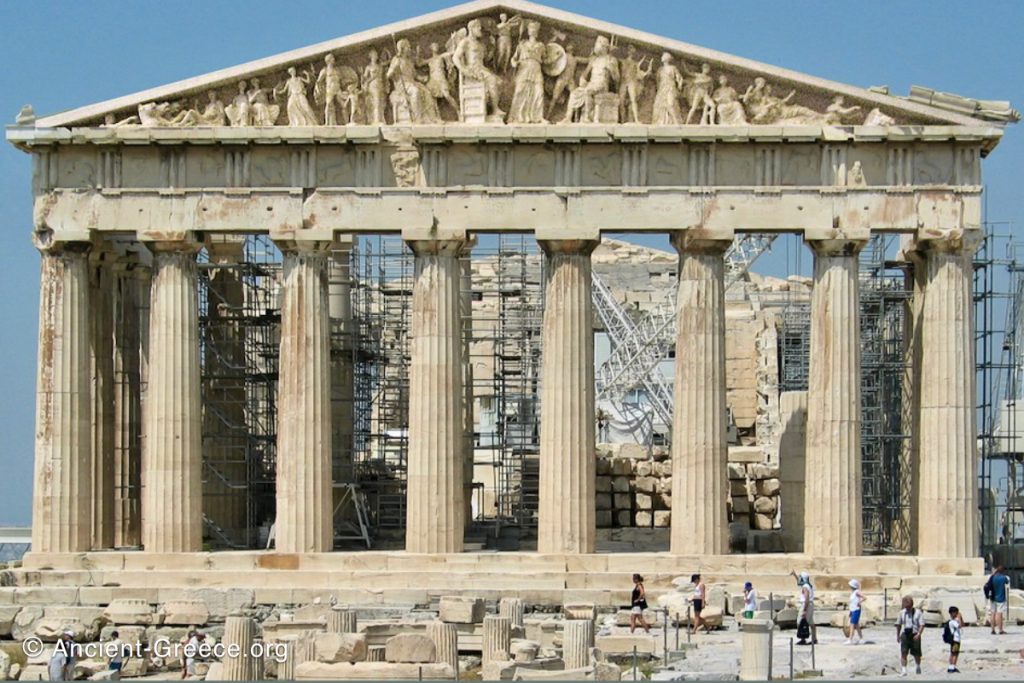
In June 2026, Greece announced a major milestone: the western façade (pediment) of the Parthenon was restored to its most complete form in about 220 years. Restorers added marble blocks to fill long-empty gaps, and external scaffolding was permanently removed from this prominent view (the first sight for visitors entering the Acropolis). This is part of a decades-long Acropolis Restoration Project using precise anastylosis techniques to reassemble original fragments where possible.
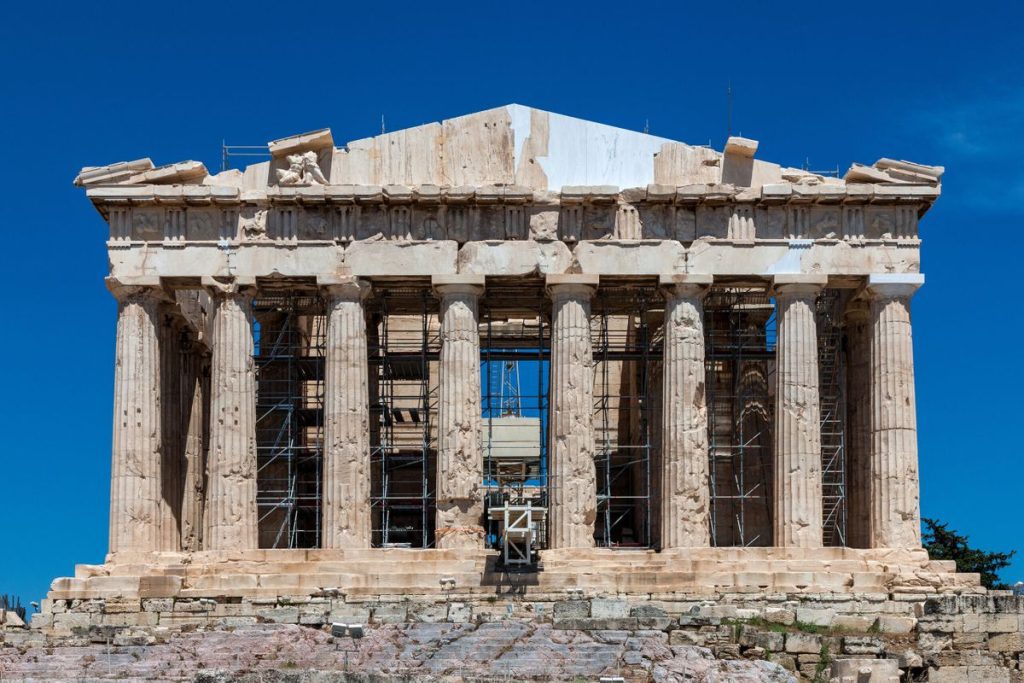
This completion underscores Greece’s modern capacity for conservation and presentation. The Acropolis Museum provides a climate-controlled environment tailored to the sculptures, allowing them to be viewed in direct visual and architectural relation to the Parthenon itself—something impossible in London. Reuniting the marbles would restore the monument’s integrity as a unified whole, enhancing understanding of its original design and cultural significance. Many argue it would be a fitting, symbolic act of cultural diplomacy: returning elements to their birthplace now that the site is better prepared than ever, without diminishing global access through replicas, loans, or digital means.
The Parthenon Marbles embody timeless questions of cultural heritage, colonialism, stewardship, and identity.
While the British Museum has safeguarded them for generations, the recent restoration of the Parthenon’s western side vividly illustrates why their place is arguably back home—completing not just a building, but a nation’s living connection to its classical past. Whether through negotiation, partnership, or legislative change, the call for reunification grows stronger as the monument stands more whole than it has in centuries.
The ruling restricts one of the largest waves of product liability lawsuits in the history of the nation. Weed killer Roundup was sold by chemical giant Monsanto.
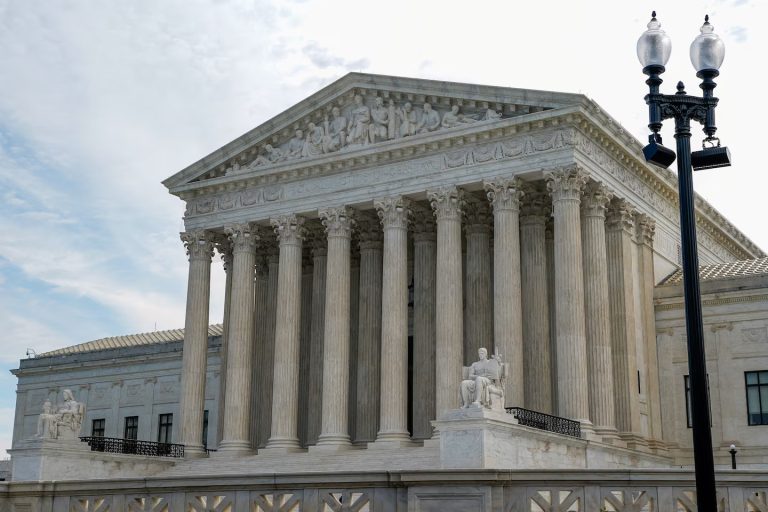
The Supreme Court on Thursday restricted a massive wave of lawsuits claiming the chemical giant Monsanto had a duty to warn consumers of alleged cancer risks from the world’s most popular weed killer, Roundup.
The decision turned on a technical legal question, but one with enormous stakes. On the line are billions of dollars, the fate of tens of thousands of lawsuits filed by cancer victims and the future of an herbicide farmers say is crucial to the nation’s food supply but health groups warn is a danger.
In an ideologically mixed 7-2 decision, the justices ruled that federal law preempts cancer victims from bringing lawsuits against Monsanto in state courts, where most such claims are filed. The justices ruled Monsanto was not required to offer a warning because the Environmental Protection Agency holds that Roundup’s active ingredient, glyphosate, is not a cancer risk.
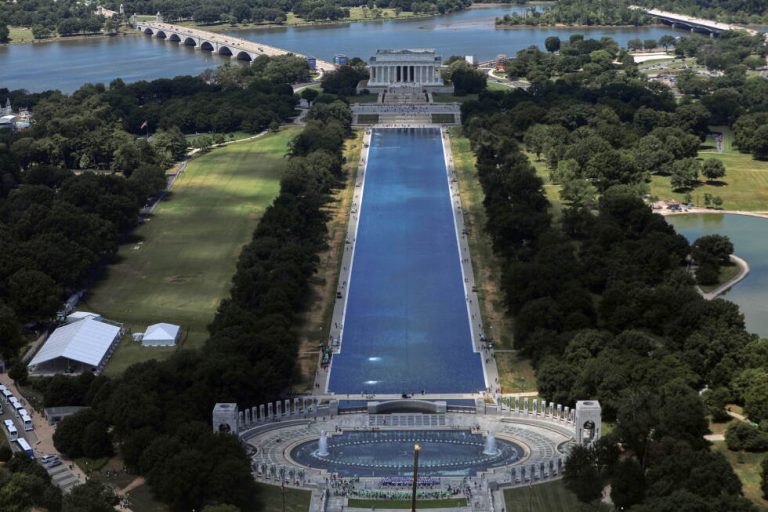
WASHINGTON (AP) — A liner along the bottom of the Lincoln Memorial Reflecting Pool was cut with a sharp knife or razor this month, causing damage to the foam sealant installed as part of a $16 million rehabilitation project, a top official at the National Park Service says.
The U.S. Park Police responded June 9 to a complaint by the park service, said Frank Lands, deputy director of operations for the park service. Lands made the statement in a court document filed late Wednesday as part of a lawsuit filed by a nonprofit organization to halt the Trump administration’s work on the project.
His statement does not say when exactly the damage occurred or whether it was a suspected case of vandalism and does not identify anyone who might have been involved.
The police report indicates damage to the pool, “including a caulk over the foam sealant that was cut with a sharp knife or razor and destruction of delaminating surface material,’’ Lands said. About 70 fence post tops also were thrown into the pool, he said.
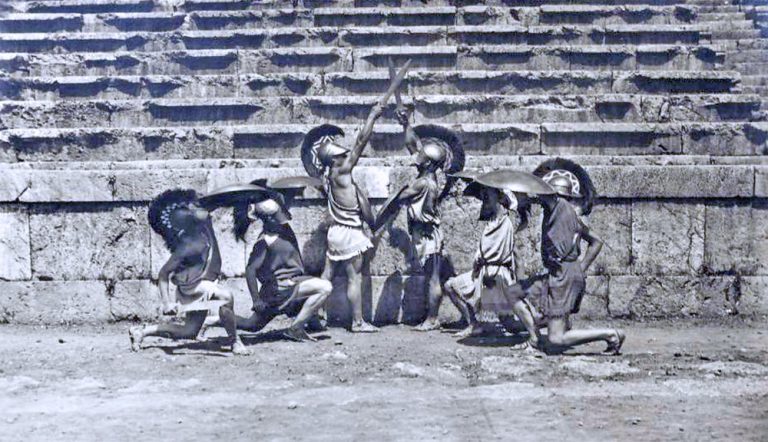
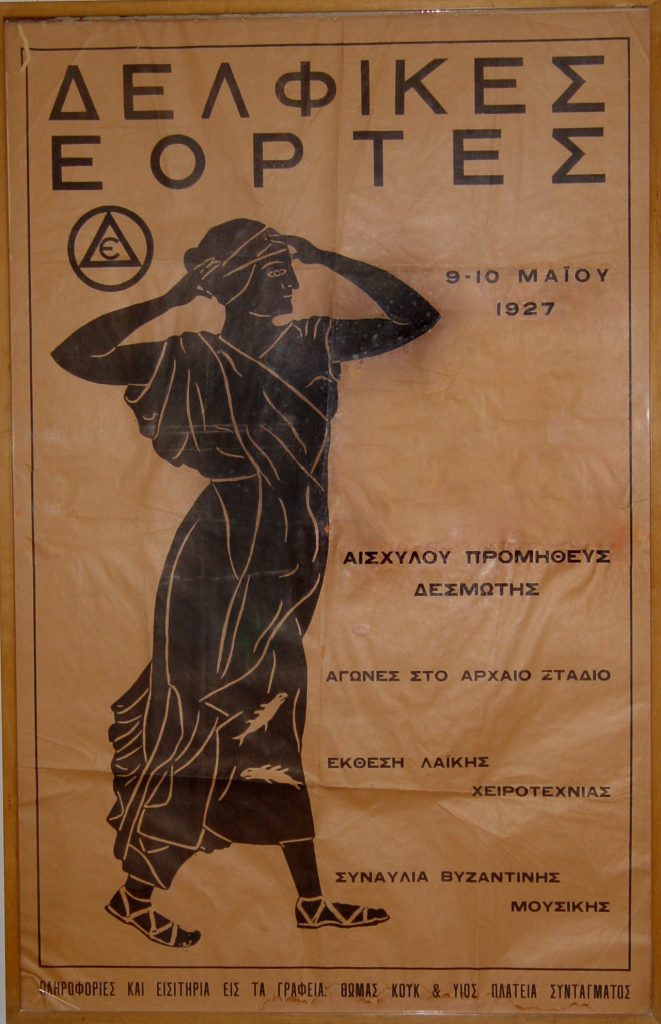
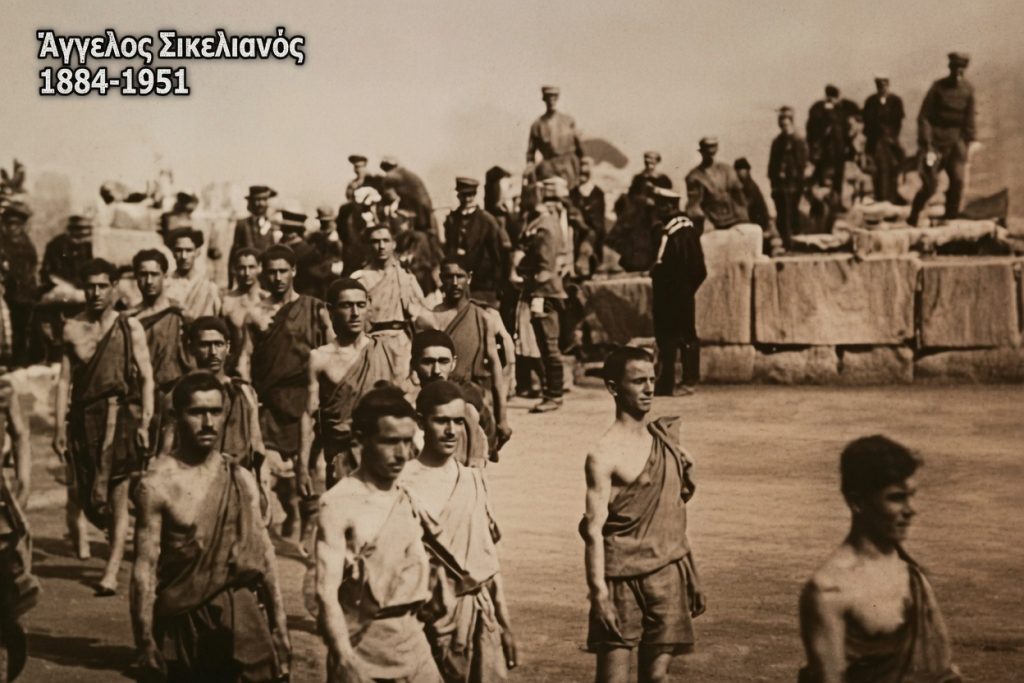
On 9–10 May 1927, the archaeological sanctuary of Delphi became the stage for one of the most ambitious cultural experiments of the 20th century. Conceived by the Greek poet Angelos Sikelianos and his American-born wife Eva Palmer-Sikelianos, the First Delphic Festival sought not merely to celebrate ancient Greece but to revive its spirit as a living force capable of uniting humanity through art, philosophy, and athletic excellence.
Although overshadowed by the modern Olympic Games, the Delphic Festival represented a parallel vision of international cooperation—one where culture stood alongside sport as an equal expression of human achievement.
The festival was inspired by what Sikelianos called the “Delphic Idea.” Rather than viewing Delphi simply as an archaeological site, he envisioned it as a universal spiritual center where nations could meet through creativity instead of conflict.
For Sikelianos, Delphi symbolized harmony because in antiquity it had hosted the Amphictyonic League, a religious association of Greek city-states that promoted cooperation around the sanctuary of Apollo. He believed the modern world, still recovering from the devastation of the First World War, needed a similar place for dialogue and cultural understanding.
Remarkably, nearly the entire festival was financed from the personal fortune of Eva Palmer, who devoted years of preparation to the project.
The First Delphic Festival was carefully designed as a complete cultural experience.
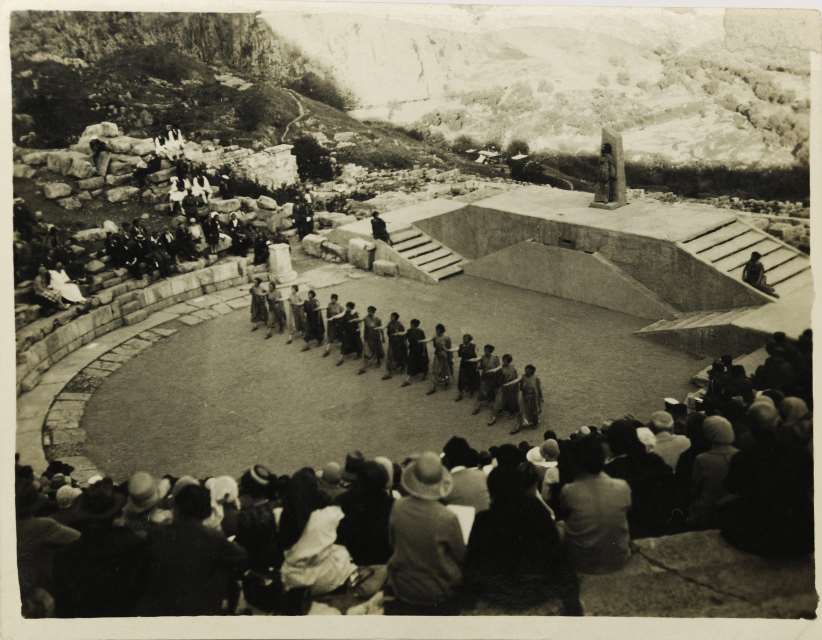
Visitors first toured the archaeological site and museum under the guidance of archaeologists before gathering in the ancient theatre. The opening ceremony featured a newly composed Hymn to Apollo, followed by a landmark performance of Aeschylus’ Prometheus Bound.
The production was revolutionary for its time. Instead of presenting ancient tragedy as a museum piece, Eva Palmer sought to recreate aspects of classical performance through original choreography, music, costumes woven by hand, and carefully reconstructed choral movement.
The second day shifted from theatre to living tradition. A folk art exhibition celebrated Greek craftsmanship, while lectures explored ancient theatre and Greek civilization. Athletic competitions followed in the ancient stadium, accompanied by a reconstruction of the Pyrrhic war dance, Byzantine choral music, and a symbolic torchlit procession that escorted departing visitors toward the port of Itea.
Unlike many historical reenactments, the Delphic Festival deliberately combined several dimensions of Greek civilization:
Sikelianos believed that ancient Greek civilization could only be understood when all these elements existed together rather than separately.
The answer is yes—but indirectly.
The Delphic Festival drew inspiration from the ancient Pythian Games, held at Delphi in honor of Apollo. Along with the Olympic, Nemean, and Isthmian Games, the Pythian Games formed one of the four great Panhellenic festivals of ancient Greece.
Unlike the Olympics at Olympia—which emphasized athletic competition—the Pythian Games combined athletics with artistic contests, including music, poetry, singing, and dramatic performance. This broader concept became the philosophical foundation of the Delphic Festival.
By 1927, the modern Olympic Games had already been revived for over three decades. However, Sikelianos believed something essential had been lost. The Olympics celebrated physical excellence, while the Delphic Festival aimed to reunite body, mind, and spirit, restoring the balance that characterized many ancient Greek festivals.
Interestingly, the comparison with the Olympics extends even further. Between 1912 and 1948, the modern Olympic Games also awarded medals in artistic competitions—including architecture, literature, music, painting, and sculpture—as part of Pierre de Coubertin’s vision of combining sport with culture. The Delphic Festival pursued a remarkably similar ideal, though with a much stronger emphasis on ancient Greek tradition.
Several fascinating details are often overlooked:
Despite international admiration, the festival was financially devastating.
Because Angelos and Eva Palmer-Sikelianos personally funded the project, the enormous costs eventually exhausted their resources. A second and larger Delphic Festival was organized in 1930, but plans for permanent international festivals never materialized. Financial pressures contributed to the couple’s eventual separation, and the Delphic movement gradually faded.
Although short-lived, the First Delphic Festival transformed the perception of Delphi. It demonstrated that the ancient sanctuary could function not only as a historical monument but also as a living cultural stage.
Its influence can still be seen in modern performances of Greek tragedy at archaeological theatres, international cultural festivals, and later efforts to revive the Delphic Games as celebrations of artistic achievement.
Nearly a century later, the First Delphic Festival remains one of the boldest attempts to reconnect the modern world with the holistic ideals of ancient Greece. While the Olympics became the global symbol of athletic excellence, the Delphic Festival reminded the world that Greek civilization celebrated not only the strength of the body, but also the power of art, music, poetry, philosophy, and shared human culture.
By SpiralArchitect – World-Intel.com

Genetic deterioration may not have been the major cause of Neanderthal extinction, new evidence suggests.
In fact, new genetic analysis shows that some of the last Neanderthals to have lived before the extinction of their lineage were not particularly inbred.
This flies in the face of prevailing theories that suggest genetic deterioration from inbreeding is the main reason our closest relatives disappeared roughly 40,000 years ago.
Evolutionary anthropologist Alba Bossoms Mesa and team have re-examined the genetic remains of 27 Neanderthal individuals, in unprecedented detail.
These Neanderthals were found in seven different locations across the Meuse Basin in Belgium, and two other locations in France.

They represent some of the last surviving Neanderthal populations in northwestern Europe, living less than 52,500 years ago.

WASHINGTON (AP) — Congressional Democrats called for investigations Wednesday into renovations at the Lincoln Memorial Reflecting Pool, as the ongoing drama over the president’s problem-plagued, $16 million rehabilitation project continued to roil the capital.
Lawmakers in the House and Senate demanded answers about the saga that’s been highlighted in the news cycle for weeks, even as the White House has repeatedly blamed — without evidence — unidentified vandals for peeling paint and other problems. Six people have been arrested, President Donald Trump said, without providing details, and a local wildlife nonprofit conducted necropsies on dead ducks found near the Reflecting Pool. The president has said the pool may need to be drained once again for additional repairs.
Connecticut Sen. Richard Blumenthal, the top Democrat on the Senate Permanent Subcommittee on Investigations, challenged the Trump administration over no-bid contracts for work on the Reflecting Pool, saying they were awarded to vendors with previous relationships to Trump.